
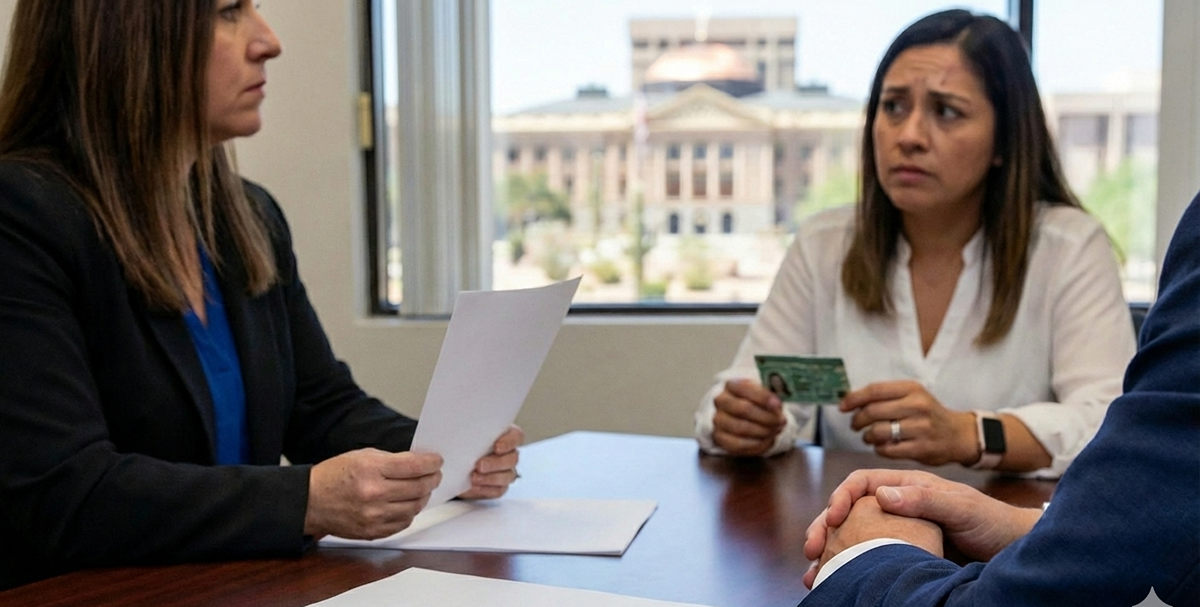
Divorce and Immigration: Understanding the Impact on Your Arizona Green Card
For many immigrants in Arizona, the prospect of divorce can bring more than just personal emotional challenges – it can also lead to serious questions about immigration status. One of the most frequently asked questions is, “Will I lose my green card after divorce?” In this article, we take a closer look at the tangled issues surrounding divorce and immigration, and offer insight into how the family court process and federal immigration rules intersect in Arizona.
It’s important to understand that although divorce is handled in state court, immigration remains a federal matter. This means that while an Arizona judge can decide issues related to property, custody, and support, decisions on your immigration status – such as getting rid of conditions on your green card or applying for citizenship – are made by federal agencies like U.S. Citizenship and Immigration Services (USCIS). However, these two processes can affect each other, especially when it comes to proving that your marriage was genuine.
Working Through the Divorcing Process in Arizona and Its Federal Overlap
Arizona’s family courts operate according to state law, and the divorce process here is designed around clear statutory requirements. To file for divorce, you must meet residency requirements, such as being domiciled in Arizona for at least 90 days. This timing can be intimidating for immigrants who recently relocated, as aligning state deadlines with federal immigration deadlines is critical. When the divorce is finalized, the resulting decree may play a role in evidence submitted to USCIS, particularly if your immigration application depends on the legitimacy of your marriage.
State courts, with their focus on property division, parenting time, and support, do not inherently affect your federal status. Yet the final divorce decree, when carefully documented, becomes an important piece of your overall tab in the eyes of immigration authorities. Whether your marriage was genuine and full of shared responsibilities can be inferred from the timeline and details provided in your divorce papers.
Timing Matters: Aligning Arizona Divorce Deadlines With Federal Immigration Requirements
One of the trickier parts of managing divorce while also safeguarding your immigration status is understanding the critical role of timing. Arizona law sets a clear residency requirement for divorce, and for immigrants, this can be doubly important. Filing too soon might lead to delays or administrative complications if the paperwork does not align with your immigration deadlines. With both state and federal processes moving on strict schedules, ensuring that your divorce timeline matches key immigration milestones is essential.
The following table outlines key points to consider when synchronizing divorce and immigration timelines:
| Consideration | State Requirement | Federal Implication |
|---|---|---|
| Residency Duration | 90 days in Arizona | Must be maintained for naturalization purposes |
| Divorce Filing Timeline | Based on state statutory requirements | May affect eligibility for expedited naturalization (3-year rule) |
| Documentary Evidence | Includes divorce decree and related filings | Used by USCIS to assess marriage genuineness |
Taking the time to match these timelines can help you avoid rushed decisions that could further complicate both the divorce and your immigration process. This is one of those situations where working closely with legal experts on both fronts is key.
Facing Conditional Green Card Challenges: What Happens If You Divorce?
Conditional green cards, typically issued to individuals whose marriages are younger than two years, add another layer of nerve-racking detail for those considering divorce. If you received a two-year card with conditions, both you and your spouse were expected to file a joint petition using Form I-751 to remove the conditions on your permanent residency. When a divorce occurs before this step is completed, the situation becomes complicated.
Thankfully, U.S. immigration rules do account for life changes. Conditional permanent residents facing divorce can often request a waiver of the joint filing requirement by demonstrating that the marriage was entered in good faith – even though the relationship has ended. While the rules provide flexibility (such as filing the waiver before, during, or after the 90-day window preceding the conditional period’s end), the process involves careful documentation of shared finances, living arrangements, and other proof of a mutually committed relationship.
Here’s a simplified bullet list of steps for conditional green card holders:
- Gather evidence that demonstrates joint ownership or shared responsibilities (e.g., leases, joint bank accounts, insurance policies).
- Document your efforts to maintain a shared life, even amid separation.
- Work with an immigration attorney to understand the various waiver options available.
- Ensure that any divorce filings accurately reflect the genuine nature of your marriage without exaggerating details for tactical reasons.
Having clear evidence is critical when USCIS reviews your case, as they scrutinize the timeline of your relationship and your actions leading up to the divorce. When these fine points are properly organized, you have a better chance of successfully removing the conditions on your residency.
Permanent Green Cards and Divorce: What Changes After the Decree?
For those who hold a permanent, 10-year green card without conditions, the immediate impact of divorce may appear less intimidating. Generally, divorce alone does not automatically revoke a permanent green card. However, even with this super important document in hand, divorce can raise concerns about possible federal reviews, especially if questions later arise regarding the legitimacy of the original marriage.
For permanent green card holders, the divorce decree becomes part of your legal record. Federal authorities may revisit your previous marriage’s details if, during a citizenship application, they require additional proof that the marriage was not conducted merely for immigration benefits. Therefore, accurate and comprehensive documentation remains key.
In these cases, the focus shifts toward demonstrating that you have maintained good moral character and full compliance with residency requirements over the long run. Even though divorce does not outright cancel your permanent status, it can trigger additional scrutiny that requires you to be prepared with clear, readily available evidence of your compliance with the original immigration terms.
Divorce and the Path to Citizenship: Adjusting Your Timetable
A common misconception is that obtaining a green card guarantees a smooth path to eventual citizenship. Yet, for many immigrants whose path was established through marriage, divorce can affect the rate at which they qualify for naturalization. Typically, eligible spouses of U.S. citizens can apply for citizenship after just three years of possessing a green card – provided they have continuously lived in a marital union with their citizen spouse.
However, if divorce occurs before you have filed your citizenship application under this 3-year rule, you may have to wait for the standard five-year period. This longer timeline can be off-putting and may feel like yet another twist and turn in an already complicated legal journey. Moreover, when applying for naturalization after a divorce, USCIS may request additional documentation to verify that the marriage was genuine.
For those aiming to adjust their naturalization timelines, it becomes critical to:
- Understand how divorce affects eligibility under marriage-based naturalization rules.
- Collect and maintain accurate records to prove the authenticity of your marriage.
- Plan the timing of your application carefully, preferably with counsel from an experienced immigration attorney.
By carefully coordinating your divorce decree and support materials, you can reduce the chance of further delays along a path to citizenship.
Essential Steps to Protect Your Immigration Status During a Divorce
While facing divorce, preserving your immigration rights requires detailed planning and a clear understanding of both state and federal procedures. Taking proactive, well-organized steps can help ensure that your legal status is not jeopardized. Here are some practical measures you can consider:
- Document Everything: Maintain robust evidence of your shared life – including joint leases, bank statements, insurance records, photographs, and any communications that support the legitimacy of your marriage.
- Keep Consistent Records: Avoid rushing into statements or filings that might inadvertently misrepresent your marriage’s history. Accurate and consistent language is essential in avoiding misunderstandings during later USCIS reviews.
- Secure Residency Proof: Pay attention to your living arrangements and travel plans. Frequent relocation can complicate the demonstration of continuous physical presence required for naturalization, so track your address changes meticulously.
- Coordinate Legal Assistance: Engage both a family law attorney and an immigration attorney. This dual approach ensures that every detail in your divorce case supports your federal immigration requirements without unintended consequences.
Below is a table summarizing the key steps to safeguard your status during the divorce process:
| Protective Step | Action | Why It’s Important |
|---|---|---|
| Documentation | Gather joint financial, housing, and communication records | Proves the genuine nature of your marriage |
| Consistency | Use clear and consistent language in court filings | Avoids misinterpretation by USCIS |
| Legal Coordination | Work with both family law and immigration attorneys | Ensures both state and federal interests are protected |
| Residency Tracking | Keep a log of addresses and travel histories | Supports requirements for naturalization and residency |
These steps are not about gaming the system but rather taking a proactive approach to protect your hard-earned legal status during a time that is already full of personal challenges.
Real-Life Scenarios: Practical Examples From Arizona
Consider a scenario where one spouse is a conditional green card holder nearing the two-year mark when the marriage dissolves. The timing of the divorce relative to the I-751 waiver filing can have a significant impact. For example, if the divorce is finalized just as the 90-day window for filing the waiver closes, any delay in evidence gathering could be nerve-racking and may even lead to additional complications.
In another example, one might face the challenge of reconciling the divorce timeline with upcoming naturalization deadlines. If your plan to apply for citizenship was based on the three-year marriage rule and you divorce prematurely, your eligibility shifts to the five-year path. This unexpected change requires careful documentation and might also prompt USCIS officers to inspect the detailed timeline of your marital history.
Both of these examples highlight the importance of managing your case carefully. Combining the legal expertise of a family law attorney with that of an immigration attorney allows you to get around unexpected complications and reduce the stress associated with tangled deadlines.
Expert Guidance: Coordinating Family Law and Immigration Attorneys
The overlap between state and federal legal processes in divorce cases calls for a dual strategy. Family law attorneys focus on state-specific issues like property division, custody, and support, while immigration attorneys help safeguard your federal status. Coordinating these two areas is key to handling the nerve-racking bits of divorce successfully.
At experienced legal practices in Arizona, such as the Law Office of Daniel Hutto, clients receive a comprehensive approach tailored to align both the divorce process and the federal immigration application. Attorneys in this field are adept at steering through the subtle details that, if overlooked, could result in additional delays or complications.
The benefits of coordination include:
- A thorough review of all legal documents to ensure consistent language between state filings and immigration paperwork.
- Advice on timing that minimizes conflicts between divorce proceedings and federal deadlines.
- Guidance on assembling the required evidence to prove that your marriage was genuine and not solely for immigration purposes.
This collaborative approach is particularly useful when dealing with conditional green card issues. By combining expertise, you can ensure that both your state and federal cases move forward harmoniously.
Practical Tips for Managing Divorce Stress Alongside Immigration Challenges
Divorce itself is a period that can feel overwhelming, let alone when immigration concerns are layered on top. Here are a few practical tips to help manage the stress and ensure you’re prepared for the legal challenges ahead:
- Stay Organized: Keep thorough and precise records of all documents relating to your marriage. This includes not just financial records, but also personal communications and proof of cohabitation.
- Plan Ahead: Understand and plan for crucial deadlines, whether it be the conditional status removal or the naturalization timeline, so you’re not caught off guard.
- Seek Professional Advice: Don’t hesitate to ask for guidance. Attorneys with experience in both divorce and immigration can help clarify the small distinctions that might otherwise be missed.
- Maintain a Clear Narrative: When preparing your case, ensure that your filings and statements clearly outline the genuine nature of the relationship. This honesty can help dispel any misguided suspicions during the review process.
Additionally, consider using a checklist to track these elements. A simple checklist might include:
- Copies of marriage certificates and joint financial documents
- Records of cohabitation, such as shared bills and correspondence
- Timely filings and documentation of residence
- Regular consultations with both a family law attorney and an immigration specialist
By following these practical tips and keeping organized, you can reduce the confusion and overwhelming stress often associated with navigating divorce and immigration matters at the same time.
Understanding the Fine Points of USCIS Review and How Divorce Factors In
During a divorce, the details supplied in your court filings might later be reviewed by USCIS, especially if you have applied for naturalization or requested the removal of conditions on your green card. Immigration officers may dig into the little details, such as the timeline of cohabitation, combined finances, and general evidence of a shared life.
Because divorce records help create a historical snapshot of your relationship, it is super important that these documents are prepared with care. The phrasing and evident consistency between what you presented in family court and what you later provide to USCIS can help reduce any skepticism regarding the genuineness of your marriage.
A few fine points to consider when preparing your documentation include:
- A clear timeline of your marriage, including co-ownership of property and shared experiences.
- Copies of joint financial statements that support the authenticity of the relationship.
- Consistent and truthful language in all legal documents that avoids any exaggeration or ambiguity.
Addressing these subtle parts with precision can help take the edge off potential complications when your divorce records become part of your federal immigration file.
Balancing Courtroom Realities with Federal Immigration Regulations
Sometimes, the political landscape between state family courts and federal immigration agencies seems like a path full of confusing bits and hidden complexities. Nevertheless, understanding that both systems have their own separate objectives can help you find your way through the maze.
In Arizona, the family court focuses on protecting your immediate interests – whether that’s securing custody for your children or fairly dividing property – while federal agencies are solely interested in the legal credentials that establish your eligibility for permanent residency or citizenship. This split focus means that it is essential to approach each system with a tailored strategy.
Even though the divorce decree might seem like just one piece of paper, it becomes a document that holds significant weight in the federal review process. Coordinated legal counsel can be the linchpin that ensures both state and federal requirements work in tandem without causing additional tension.
Final Thoughts: Protecting Your Future During a Difficult Transition
Divorce is never an easy journey – it is often full of personal challenges and, when combined with immigration concerns, can feel even more overwhelming. The twists and turns of the state and federal processes may be intimidating, but with careful planning, accurate documentation, and professional guidance, you can work through these nerve-racking bits while protecting your visa or green card status.
In my opinion, the best course of action for anyone facing these issues is to form a coordinated team that includes an expert in Arizona family law alongside an immigration attorney who understands the federal side of the equation. Together, these professionals can help you figure a path that minimizes legal pitfalls and ensures that your personal and professional future remains secure.
By staying organized, planning ahead, and remaining transparent throughout the process, you can avoid making mistakes that might later complicate your immigration status. Remember that divorce, no matter how tense or laden with issues it may seem, does not have to be a journey with no exit. Instead, treat it as an opportunity to reassert control over your future legal standing.
If you are currently dealing with the challenges of divorce and questioning the impact on your immigration status, consider reaching out to experienced professionals who can help guide you through this period. Many Arizona law offices offer free consultations and can provide personalized advice specific to your circumstances.
Ultimately, protecting your green card or your ability to naturalize isn’t just about paperwork – it’s about safeguarding your future. With the right legal team by your side, every confusing bit and complicated piece of the process can be addressed in a thoughtful, strategic manner.
Conclusion: A Coordinated Approach for a Secure Future
In conclusion, the relationship between divorce and immigration status in Arizona is filled with tangled issues, timing challenges, and subtle details that must be handled with care. Both state family court processes and federal immigration procedures have specific roles to play, and successfully managing your case depends on aligning these processes effectively.
Whether you are dealing with the conditional green card complications or facing an adjustment in your naturalization timeline after divorce, it is super important to work with legal professionals who can help you steer through these tricky parts. By gathering reliable evidence, maintaining consistency in your legal filings, and following expert advice from both family law and immigration attorneys, you can protect your rights and ensure that your journey continues smoothly.
While divorce may be an intimidating period of change, remember that with adequate organization and support, you can figure a path that safeguards your immigration status and forms a solid foundation for your future. Consider the benefits of dual legal guidance and maintain diligence in documenting every relevant detail, as these steps are key to keeping your legal status intact.
Ultimately, remain confident that even through a time of personal upheaval, you have options. By taking a proactive approach and aligning all aspects of your legal process, you can emerge from the experience with both your personal and legal foundations secure.
Read more about this topic at https://azcriminalandfamilylaw.com/green-card-status-after-divorce/
Related articles you might like
How Will Divorce or Separation Affect My Immigration Status?
Divorce & Green Card: Immigration Impact